I am a mother of six, and I love each of my children very much.
I can prove it to you, too. I got up early for them this morning-
very early. I used to be a night person, you know, in that other
life. But this morning I was up before the birds. They woke to
breakfast on the table. I wiped noses and bottoms, cleaned up spilled
milk, cereal, and more milk. I remembered that one’s allergy
medicine, and I found the other one’s missing shoe. I sat through
another episode of Sheriff Callie’s Wild West. I started a load of
laundry, answered a million questions from squeaky little voices, let
the littlest one “help” me feed the dog, and made sure they were
all wearing pants when we left the house.
I love my children. Are you convinced?
Perhaps you are convinced. But let’s ask another question, a
more important one:
Are they convinced?
Do my children know that I love them?
Do yours?
Perhaps your morning was much like mine. I am certain you
could list a hundred little pieces of evidence that show you love
your children. But mothers, hear this from my heart: it is possible to
love our babies dearly, to serve them all day every day, and to not
effectively communicate that love to their little hearts.
How can this be possible?
It is possible if we are not speaking the same language.
In the book The Five Love Languages of Children, Gary Chapman and
Ross Campbell argue that love is our most basic need, and that we all
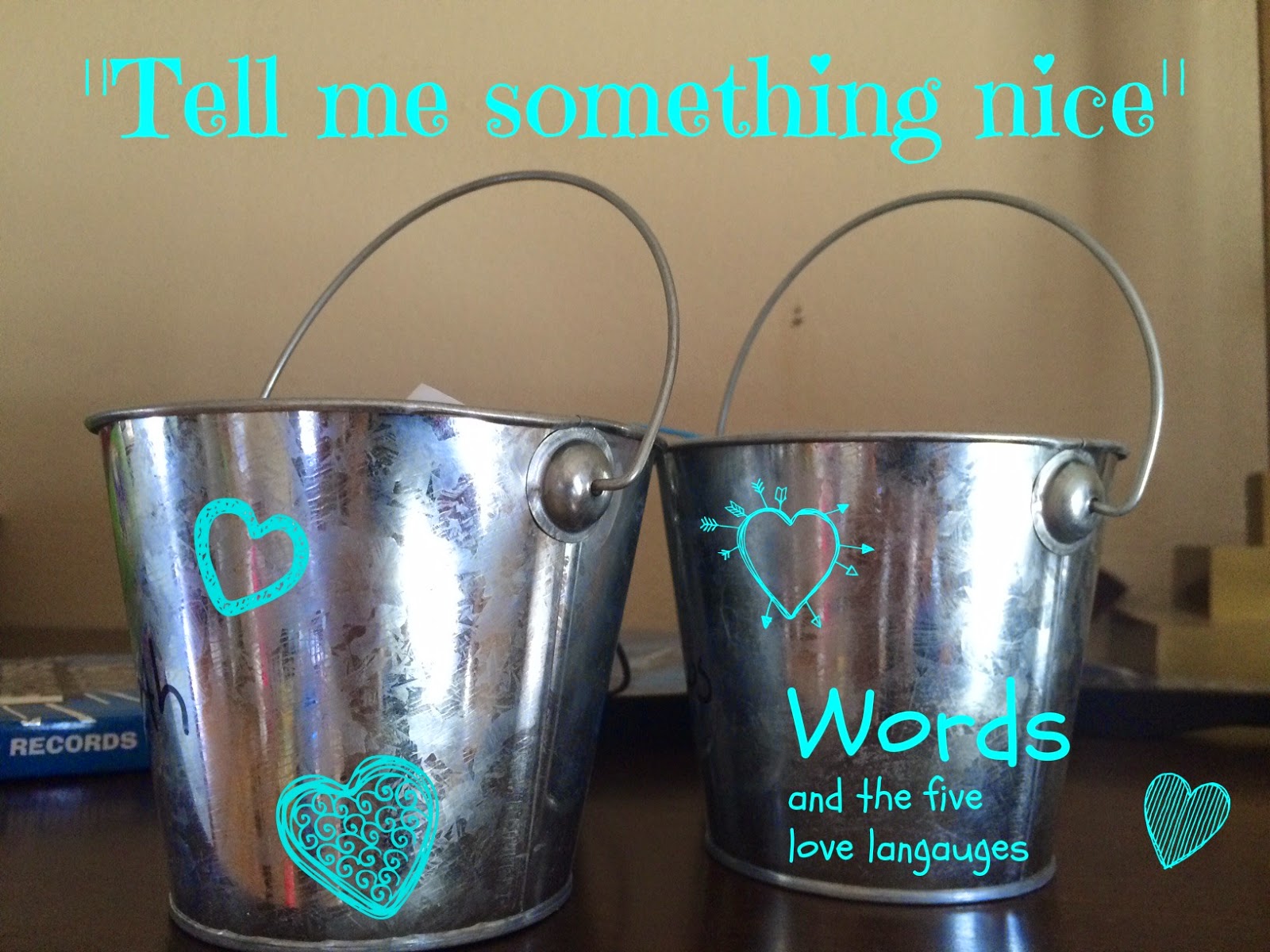
carry around “love tanks,” so to speak. To be healthy and whole,
we need our tanks filled: we need to be loved, and we need to KNOW we
are loved.
Simple enough, perhaps. But here’s the challenge. Just as we
each have different personalities, we also, the authors argue, give
and receive love in different ways: we speak different love
languages.
Imagine your child toddling around, carrying a huge question: Am I
loved? Am I lovable? And especially in these early years, you, mom,
are giving the loudest answer to this question.
(Now that's some serious pressure.)
There is an enormous difference in the way a life is experienced
with a full or empty tank. Imagine an empty love tank like an empty stomach. When we are
hungry, incredibly hungry, we can think of nothing else but
satisfying that hunger. We won’t be learning, playing, socializing,
not with our full attention. No, an empty stomach screams for
attention; just like an empty love tank. Though they
cannot articulate the problem, they are worried, insecure, sometimes
frantically asking the question:
Am I loved?
On the other hand, living with a full love tank is an enormous
blessing for a child. When your child knows he is loved, he feels
secure, confident: more likely to take the risk of learning something
new, making a friend, exploring, discovering. He is satisfied- in
body and heart- and so is able to grow and bloom.
So, how do we fill these love tanks? According to the authors,
there are five overarching categories, and I plan to write about each
one.
But first, a few preliminaries.
1. People generally have 1-2
primary love languages, though most
people appreciate expressions of love in all five.
2. It’s nearly impossible to identify a child’s primary love
language before age five.
3. Every child needs expressions in all five languages.
4. Knowing yourself is essential! Some of these languages will
feel natural to you, and some, utterly foreign. Learn the difference
so you know where you need to grow!
The five love languages are as follows:
Physical Touch
Words of Affirmation
Quality Time
Gifts
Acts of Service
Imagine the busy-morning scene above. Now, imagine it through the
eyes of a child whose primary love language is physical touch. And
imagine his mama (me) most often uses touch only as a means to “get
stuff done.” As in, “here, put this on.” “Give me your foot
so I can tie your shoe.” “Stop it, I don’t want to wrestle
right now! And “Don’t try to kiss me while I’m eating, ugh!
Just eat your food!” All the acts of service in the world would go unnoticed by the child who aches for snuggles.
On the one hand, I am who I am, and I love like I love.
And yet, perhaps I could communicate better. Perhaps, in my
vocation, I am called to love uncomfortably sometimes, love in a way
that feels unnatural. It is painful to notice those blind spots, and I seem to notice a new one each time I read this book! But it is a growing pain, a pain that shows me my need to stretch and what to pray for.
And friends, God does help with these things when we ask.
During this blog series, I intend to write on each of the love languages primarily from a mother's perspective, though I might address marriage and friendship situations as well. I hope this series will be challenging and encourage to all of us as we seek to better love those around us with the help of God.
Father,
As we love the little ones you have placed in our lives, help us to communicate that love loudly and often, in ways they can understand. When the weight of this calling weights on us heavily, and we feel the inadequacy of our own love, fill us up with that which only You can give. Use our imperfect love to fill our children, and most importantly, point them always to You.
In Jesus' name, Amen.
Do you already know which of the above is your primary love
language?
Which area is your weakest?
How does an empty tank distract you?
How does it feel to have a full tank?
Share your thoughts with me below! I’d love to hear from you!
Be multi-lingual! Stretch and grow in the love languages, for the sake of those you love!
------------
The Five Love Languages books, in their many forms, are also available on Amazon.